BougeRV Diesel Heater Review: Is It Worth It for Cold-Weather Camping?
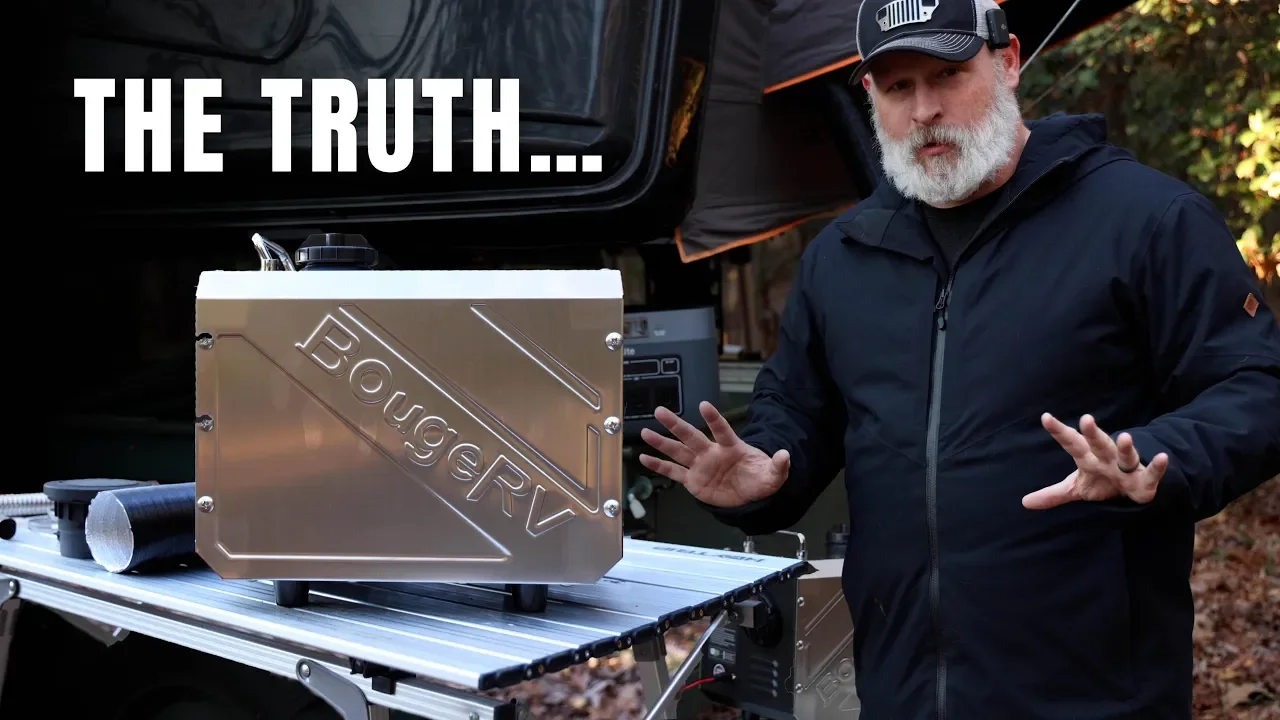
If you’ve ever tried “cold” camping without proper gear, you know the line between adventure and misery is pretty thin. I’m not a hardcore winter camper—especially not the snowy, sub-zero kind—but I do camp year-round in South Carolina, and even here it can get legitimately cold.
For this test, temps dipped to about 26°F overnight and hovered in the 30s later on. BougeRV sent me their portable diesel heater to field-test, so I set it up exactly how most overlanders would use it: heater outside the tent, hot air ducted inside, exhaust vented safely away.
Here’s the big question: Is the BougeRV diesel heater actually good—and is it worth the money?
Shop Amazon now
Bouge RV Diesel Heater
Heated Blanket:
Upgraded heater hose
Shop on the official site
Diesel Heater discount code Matt08:
Heated Blanket
Quick Verdict
Yes—this heater works extremely well and feels like a step up from the disposable “cheap Amazon diesel heaters.”
If you want reliable heat for a rooftop tent, ground tent (with proper venting setup), or a camp setup where you can keep the unit outside, this is a strong value—especially at around $299.
The one major weak point? The included hot air duct hose. More on that below.
What Makes This BougeRV Heater Different?
Let’s be honest: BougeRV often gets labeled as a “budget” overland brand. But this heater doesn’t feel like a budget toy.
1) Solid, serviceable steel construction
The unit comes in a steel case with screws, meaning it’s serviceable. That’s a big deal because many cheaper diesel heaters are basically “use it until it clogs, then replace it.” Diesel heaters can build up soot over time—having something designed to be maintained matters.
2) Automotive-grade fuel cap
It uses an automotive-style fuel cap designed for proper venting while staying spill-resistant. That’s one of those small details that makes a product feel more “real world” and less like a garage experiment.
3) Built-in safety and warranty
BougeRV includes safety features like overheat and short-circuit protection, and the heater comes with a 2-year warranty. In the diesel heater world, that’s reassuring.
Setup: How It Works (And Why It Matters)
The safe way to run a diesel heater for tent camping is:
Heater stays outside the tent
A hot-air duct hose runs into the tent
Exhaust vents out the back, away from where you’re sleeping
That design is the whole point: you get heat inside, without diesel exhaust inside.
And yes—placement matters. You don’t want this unit inside a tent. You want it outside with proper clearance so it can vent correctly.
Controls: Simple Buttons + Remote + App
Control options are one of the nicest surprises here.
On-unit controls are simple and accessible
It includes a remote
It also works with the BougeRV app (and it connected ridiculously fast)
In the app, you can adjust output from about 5 kW down to 1.4 kW, and it’s easy to dial in. Once it was running, I backed it down to around 2 kW, then eventually ran it on the lowest setting because it was… honestly too effective.
Power Use and Noise
Startup power draw
On startup, I saw it pulling around 114 watts, and BougeRV lists starting power at 150 watts. Diesel heaters typically draw more power during ignition and ramp-up.
Running power draw
Once running on the lowest setting, it settled into a very low draw—roughly 7–8 watts continuously in my test.
Noise level
It’s noticeable, but not annoying. It reminded me of a white noise machine—the kind of sound you can absolutely sleep through.
Real-World Results: Tent Temperature vs Outside
This is where it impressed me.
At one point during the night:
Outside: ~47°F
Inside the tent: ~80°F (before venting)
I had to open vents to cool things down. Later, when it was about 37°F outside, I was seeing mid-60s to around 70°F inside depending on which side of the tent I was on and how much ventilation I left open.
In the morning:
Outside: ~40°F
Inside: ~65°F
That’s a legit comfort upgrade. The difference between “I’m enduring this” and “I’m sleeping well.”
Fuel Use: How Much Diesel Does It Burn?
I put in a little under a gallon and ran the heater for about 13 hours total, including two startups (startups draw the most power, and potentially more fuel as well). By morning, it had used most of that fuel.
That’s not a lab-measured consumption test—but it is a realistic “overnight camp” result, and it tells you what you need to know:
This heater can comfortably run all night and keep a tent warm in freezing-adjacent temps.
The One Big Downside: The Included Hot Air Duct Hose
The included duct hose works, but I don’t love it.
It’s stiff and annoying to stretch open
Some edges felt a bit jagged (wear gloves the first time)
It’s not long enough for certain rooftop tent setups if the heater is on the ground
It’s not as flexible as you’d want in cold conditions
My recommendation: Plan to upgrade the hose. Here is what I used to Upgrade the heater hose
The heater itself is excellent. The stock ducting is the weak link.
So… Is the BougeRV Diesel Heater Worth It?
If you want real heat for cold-weather camping—without building a complicated install—this is a win.
Buy it if you:
Want to camp comfortably in 30°F and below
Need a portable tent-heating solution
Prefer something serviceable over disposable
Want app/remote control convenience
Think twice if you:
Don’t have a safe way to run the heater outside your tent
Need an all-in-one kit with perfect ducting (you’ll likely want a better hose) Upgraded heater hose
Final take: For around $299, this heater delivers real performance and feels like a product built to last—not a throwaway gadget.
Shop Amazon now
Bouge RV Diesel Heater
Heated Blanket:
Upgraded heater hose
Shop on the official site
Diesel Heater discount code Matt08:
Heated Blanket